


I SPEAK FOR THE DEAD
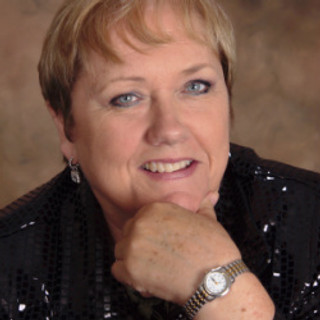
 BIOMary Jumbelic, M.D. is an author and forensic pathologist, formerly Chief Medical Examiner of Onondaga County, NY. In her 25-year career, she has performed thousands of autopsies and helped to pass national safety policies for consumer products, preventing untimely deaths. You might’ve seen her as an expert witness on Dateline, 48 hours, Discovery Channel, Law&Crime, and more. While retired from government work, Mary continues to consult on cases, pursuing her passion for writing by sharing her stories of experience both in and out of the morgue. She has been nominated for a Pushcart Prize, and her first book Here, Where Death Delights (2023) has been featured in Times Square and is the recipient of international press and awards. Mary’s second book Speak Her Name: Stories from a Life in True Crime (2025) received early praise, including First Place with Writer’s Digest e-book awards, a feature in New York City’s Time Square, and press across more than 150 outlets nationwide. This book has also garnered first place in NAIWE, CIBA, and Killer Nashville in the category of True Crime. |
INTERVIEW LYNN: Can you briefly describe the role of a forensic pathologist in investigating a murder. MARY: The role of the forensic pathologist is to determine the cause and manner of death, the ‘what’ and ‘how’ that caused the person to die. Was it a heart attack? A gunshot wound to the head? And exactly how did that happen? As a forensic pathologist, and former Chief Medical Examiner, I use my extensive education and experience to make those determinations. I work with law enforcement agencies, legal representatives, and also use tools such as x-rays and toxicology to refine the process even further. With every investigation, I look closely at the scene, review the first responder’s reports and witness statements in addition to examining the body inside and out. It may be surprising to know that much attention is paid to the external aspect which has clues to the person’s history, such as tattoos, scars, maybe a bar stamp from the night before. Patterns of injury on the skin can be correlated with the internal wounds. LYNN: Please explain what you mean by “striving to give law enforcement every scrap of evidence left behind on the body?” MARY: Evidence is critical to connecting the killer with the victim. Every small fragment of evidence must be considered. It may provide the connection that explains the crime: strands of hair from the head and limbs; trace material on the skin; sexual assault kits; fingernail clippings; clothing and bedding. All this and more may help tell the story of the crime. In my book Here Where Death Delights, I share a story I titled “Duct Tape”; I explain how the ends of the tape that were used to bind an elderly woman’s wrists had matched the roll of the same tape found at the killer’s home. The microscopic tears of the tape perfectly aligned. I collect it all—every scrap. LYNN: Explain your expertise in childhood abuse and neglect. MARY: Working in three different environments over 25 years––Chicago, Peoria, and Syracuse––I saw child abuse and neglect in its many forms. I have witnessed a parent step on a child’s head to stop it from crying—and externally, there were no injuries. Internally, however, there was massive bleeding. This emphasizes the importance of conducting an autopsy in each and every child death. I learned to look for all the markers of child abuse and neglect––dehydration, stunted growth, unexplained healing fractures, chronic injuries. By a methodical investigation and autopsy, justice can be done for these young victims. LYNN: What were some of your frustrations in having to testify in court as an medical examiner? MARY: At times, I had more information about what happened to the deceased than I was allowed to present on the witness stand in my role as medical examiner. For example, in one case of a gang rape and execution of a young teen, Michelle, I was forbidden from testifying about any of the sexual assault injuries. This happened because a plea deal was struck between the defense and prosecution to omit this information. I talk about Michelle in my book Speak Her Name, advocating for the victim and sharing her story as I could read it on the autopsy table. As a pathologist, I knew what the girl had suffered just prior to being shot, but I wasn’t allowed to tell the jury. To be a forensic pathologist, I had to be strong and stand up for the decease. I am proud to have been called a bitch many times in my career. I even have a funny acronym for the letters––“Boys I’m Taking Charge Here.”
LYNN: How can you determine what weapon was used to cause a bruise or injury on a body? MARY: Forensic pathologists train on the patterning of wounds on the skin. I learned to tell the difference between blunt and sharp force; to recognize the difference in gunshot and shotgun wounds. Each weapon may produce a slightly different bruise depending on where it strikes the body: head, limbs, torso. Being familiar with the myriad of patterns and weapons is important for a forensic pathologist. I had great training in the urban and busy environment of Chicago, learning from a dozen more experienced pathologists daily. LYNN: Tell us about the “Bob & Leslie” case, how you became involved, and what the eventual outcome was. MARY: Leslie Neulander, a friend of mine, was murdered by her husband Bob. He attempted to obscure the crime scene by staging it to look like a fall in the shower. A mutual friend was convinced she was murdered. Months after the death certificate was labeled as ‘accident,’ I was asked to review the case by the district attorney. I labeled it a homicide. It took two years to gather information for a trial. The husband was found guilty but due to juror misconduct was let out on appeal. A second trial found him guilty, and he is serving 20 years-life. Leslie formed the nidus of the book and is heavily detailed throughout Speak Her Name: Stories from a Life in True Crime (2025). LYNN: How often did you go to the scene of the crime while the body was still there? What was your role at that point? MARY: In the old days, I had far fewer death investigators at the medical examiner’s office, and so I would go frequently to the scene of homicides and suspicious deaths. My role was to evaluate the decedent exactly how the body was found. This is useful information since I can see the position, assess the environment, and advise law enforcement about the injuries present. Sometimes what looked suspicious to the police turned out to be a suicide. At times, the police might feel something amiss at the scene. Their recognition was vital information to share with me. I brought forensic expertise to the evaluation. The cooperation between myself and the detectives was paramount in sorting out the case. LYNN: Could you explain how you color code notes on a body diagram when you're doing an examination? MARY: I trained using a multi-colored click pen to draw my notes on the body diagram. By color coding it was easier to organize the normal findings, the medical intervention, and the injuries when I dictated the case. All of the normal findings––hair color, eye color, height, weight––I noted in black ink. Trauma was marked in red; bruises, stabs, amputations. Blue was used for medical intervention: intravenous lines, airways, cervical collars. Decompositional changes were noted in green. LYNN: Tell us how you handle a victim’s garments and what they can add to your process of discovery. MARY: The position of the decedent and what they were wearing is important in understanding the circumstances of death. Is the clothing appropriate for the environment? Is the decedent dressed in a parka indoors with the thermostat set at 80 degrees F? Clothing also might contain trace evidence. Clothing also plays a role with bullet wounds. The clothing may absorb some of the soot and stippling that comes from the weapon, so it is important to look at the clothing of a shooting victim in addition to the skin. It may also show different ripping patterns in the entrance and exit wounds. Clothing is crucial evidence in a homicide. LYNN: Where have we gone wrong in the country with regards to preventing domestic violence? MARY: Femicide is an international problem. Changes will have to be made on a societal and global level to have an impact on this pervasive problem. From my perspective as a medical examiner, my goal is to witness the women—their suffering must not be forgotten. By staring at this type of violence, I am remembering what happened to the victims. I am acknowledging what they went through. It is my belief that to move forward, we need to go through the witnessing, through the pain. Women are vulnerable to being killed by their male partners and family members. They are killed most frequently in the place that should be safest of all: their home. Western culture has come a long way to providing equity to women, in the job place, in schools, in politics. Yet it is in the most basic of relationships where the inequity of violence remains a killer. LYNN: Please tell us how you navigated a case of cyanide poisoning and the hazmat threat it posed. MARY: I have handled a number of cyanide cases in my career. Some were intentional poisonings, and others were suicidal ingestions. Each posed a risk to me as I performed the autopsy. I was extremely fortunate when I handled my first cyanide case—no one knew cyanide was involved. While conducting the examination, I felt dizzy and nauseous, noting a strange aroma emanating from the body after I cut it open. From this case, I learned I had the ability to smell cyanide and have used my nose in pursuit of this poison. In my first book Here, Where Death Delights, my story “Scents and Sensibility” details my reverence for this overlooked appendage. LYNN: Please briefly tell us about the case of murdered children and the sleep apnea monitors. MARY: In Chicago, I reviewed a series of cases at the request of the chief medical examiner. A mother, Deborah Gedzius, was suspected of killing her six children over a 15-year period. The first four cases had been labeled SIDS (Sudden Infant Death Syndrome), and the last two as Undetermined. The case was re-opened because her ex-husband was found murdered. She was the last person to see him alive. After re-evaluation of the children’s death, I concluded they were all killed by the mother. This was based on extensive review of the scenes, autopsies, medical records, and witness statements. National experts including pediatric pathologists corroborated the findings. Apnea monitors were beginning to come under scrutiny and in these cases had all been unattached or not working at the time of the deaths. Though the police and medical examiner’s office felt confident in the conclusion, the state’s attorney felt they did not have enough information to charge. LYNN: You read a lot of mysteries. What are a few things mystery writers get wrong when writing about finding a body or detailing evidence found on a body? MARY: Whenever I’m reading a mystery, I allow a certain leeway with the discussion of postmortem findings. After all not everyone has the knowledge of a forensic pathologist. However, if there are too many mistakes, it takes me out of the story. The narrator becomes unreliable. The most egregious mistakes are the sloppy scene descriptions. The body is face down, but somehow the detective ‘looks into their eyes’? The terms ‘laceration’ or ‘stab’ are used erroneously (one is blunt force, and the latter is sharp force). The pathologist opines too much at the scene or does too little at the autopsy. Even when I write nonfiction that I have lived and breathed, I do a tremendous amount of research. I do not rely on my memory alone; I review journals, reports, newspaper coverage, trial transcripts. I look up the weather, the dates, the cultural milieu of the time I am describing. It behooves a mystery writer to set the scene in the same authentic way. In today’s world, there’s just no excuse—information abounds on the postmortem process, evidence collection and wounding patterns. It behooves a writer to do the research required to accurately describe the scene of death and the autopsy. I even offer a course ‘Forensics for Writers’ that teaches storytellers how to create authentic and accurate portrayals in their works. You can find this and more on my website at www.maryjumbelic.com. LYNN: Many thanks, Mary. I very much appreciate you taking the time to spend time with us. |


Comments