

THE BONE WHISPERER: Interview with Dr. Alison Galloway

BIO
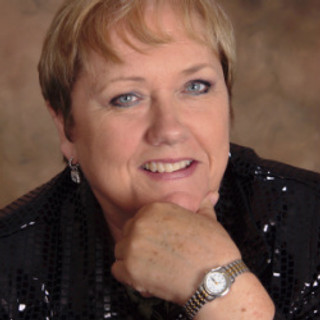
Dr. Alison Galloway is a forensic anthropologist, now retired from the University of California, Santa Cruz. She is best known for her work in identifying the physical remains of Laci Peterson in the Scott Peterson trial. She co-edited a book called The Evolving Female: A Life History Perspective with Mary Morbeck and Adrienne Zihlmann. She is also editor of Broken Bones: Anthropological Analysis of Blunt Force Trauma and co-editor of the second edition of that volume as well as co-author of Practicing Forensic Anthropology: an eResource with Susan Kuzminsky.
Galloway credits her inability to smell offensive odors for more than a few seconds for her capacity to deal with some of the difficult aspects of forensic work. She is one of 75 highly skilled forensic anthropologists in the United States and is regularly called upon by the authorities to provide her expertise.
INTERVIEW
LYNN: What motivated you to pursue forensic anthropology?
DR. GALLOWAY: I was initially training to be an archaeologist with my undergraduate work in African prehistory. I studied African stone tools, Southwestern US ceramics, and some rock art. I did not continue immediately onto graduate school, however. After working in clerical jobs, I was able to get a job in cultural resource management (archaeology usually done before construction).
During a salvage excavation for a large canal, I was asked to head the removal of a cemetery. I was very intrigued by bones and also that those with advanced degrees were in the shade while the rest of us were moving wheelbarrows in the sun. I decided to return to graduate school for my master’s degree and made sure to study human. My instructor, Walt Birkby, was a practicing forensic anthropologist, and I was hooked after going on my first case with him. I found that not only could I stomach the sight of dead bodies, but they were the only way left to tell how someone died (and often how they lived).
LYNN: What excites you the most about studying bones?
DR. GALLOWAY: For me, bones speak about the actual people living. Just as my own skeleton will bear marks of fractures, surgical repairs, overuse, and age, the skeletons of those we examine speak to how they lived their lives. We see the diseases, nutritional changes, trauma, and cultural modifications that people experienced.
In forensic remains, these are often very understandable. For example, some people will have gold crowns while others may only be able to afford steel or porcelain facing instead of full coating. With bones, there is not the distance between the people and what remains, whereas studying stone tools or ceramics only tells you about what they made.
Artifacts are affected not only by what someone likes or needs but also what the cultural expectations are. In some cases, bones will also be culturally modified but, for the most part, people don’t really think much about the bones that carry us around on a daily basis.
LYNN: What kinds of clues do you look for to determine when and how someone died?
DR. GALLOWAY: We evaluate the entirety of the remains to determine when and how someone died. “When” is often determined by the level of decomposition. We evaluate this condition (whether it is active or has progressed to mummified or skeletonized) and look at the weather data from the area in which they were recovered.
We also draw on our own experience about how bodies decay in the region. This process allows us to give a time interval in which we think the person likely died. Unfortunately, there may have been other factors such as animals that scavenged the remains, or the body may have been frozen prior to being deposited where it was found. What we hope to do is allow the agency to narrow down the possible matches. However, this estimation of postmortem interval can be critical if the case goes to court, as a defendant will want to produce an alibi for that period.
We do not determine the cause or manner of death. Cause is the actual mechanism that terminated life, while manner is the circumstances (homicide, suicide, natural causes, accidental, or undetermined). We do look at defects caused by blunt force, sharp force, or projectiles such as gunshot injuries. Each defect is categorized, described, and documented. If possible, we would also sequence these so we can say defect A came before defect B, etc. In doing this we also have to identify and isolate injuries that occurred prior to death (antemortem) and damage after death (postmortem). This information, along with the postmortem time estimate, are often the critical issues if we go to court.
LYNN: Can you give us an example of an ‘aha’ moment? Perhaps when some elusive clue finally came to light?
DR. GALLOWAY: I enjoy writing up cases because that is when I often make sense of things. In one case, for example, after documenting a series of sharp and blunt force defects on a body, we were able to show that the person had been hit on the head, tortured with a knife or similar instrument, and then had the throat cut. Later, confessions proved that the person had been assaulted and killed in just this manner.
Similarly, it is often during writing that we start to really understand the sequence because we must explain and support our conclusions. In a situation where there are massive fractures, this process requires documenting which impact and associated fractures came first. Subsequent fractures cannot “cross” a pre-existing fracture line, and we use this to establish sequence. Mapping out the fractures and putting them in order can let us say things like “the initial impact was on the posterior (back) of the head.” This information is critical if a defendant is claiming self-defense.
LYNN: You ran a body farm. Tell us about that and how that influenced you.
DR. GALLOWAY: When I worked at the University of Tennessee, Knoxville, I worked to get the Anthropological Research Facility, commonly known as the “Body Farm” into shape. We use these facilities (there are a number of them now), to study how decay progresses within the region and what impact certain factors have on that rate of decay.
For example, insects are important in causing decay, but what if the body is protected from insects by being wrapped in a tarp. The other less apparent reason for these facilities is to obtain skeletal collections of modern people. Most such collections held by universities are from bodies collected in the early 1900s, mostly from indigent individuals. No donor consent was obtained. In addition, the living conditions of these people no longer matches what we would expect now in the 21st century. New collections with documented life histories, age at death, and disease patterns are important for future studies, and, with these facilities, we can do it with remains for which people donated knowing what would happen.
LYNN: You worked on the Laci Peterson case and determined how old her unborn fetus was when she died. How difficult is it to work under such a public spotlight?
DR. GALLOWAY: Any time you work a high-profile case there is additional pressure. There is often no way that you can block from your mind who it is you are examining because their pictures and profiles have been splashed across the headlines. One of the things we try to do is keep an open mind, and that becomes harder when there are ideas already in your mind.
With high profile cases, the investigators already have an idea of how and when the person died. They are often looking to you for confirmation of their theories, and that is something we cannot do. We have to look at the remains and come to our own conclusions.
High profile cases almost always end in a trial. Some people think that will mean you have to be extra careful about what you say, but we should take “extra care” with every case we tackle.
The difference when you are dealing with a case that may end up in court is that your report should address possible points raised by the opposing counsel. For example, if there is speculation that the person died in a manner other than what is being put forward by the prosecution, does your report address that.
Often, we cannot rule out that possibility and, remember, we are only talking about the actual defects on the body and not how the person was killed. For all of our reports, we should anticipate that not only will it be brought to court but that, before that happens, one of our colleagues will be hired to look through and critique the report.
LYNN: What do the TV shows and mystery books get wrong about your field? How crazy does that make you?
DR. GALLOWAY: Most of the TV shows and books involve the forensic anthropologist far too deeply in the investigation. Usually, it ends up with the anthropologist becoming the target of the serial killer. In contrast, we play a very small and limited role in the overall investigation headed by law enforcement. We do not question witnesses and families, we do not visit crime scenes alone in the dead of night, and we do not “fight” for a conviction. We are impartial expert witnesses, and my testimony on the stand should not change even if the defendant changes. In real life, I often get to trial and have to figure out which person at the defense table is the suspect. And remember, we also work for the defense at times as well. Again, our testimony should not change despite which side has covered our fees.
LYNN: Now that you’ve retired from teaching, what do you miss most about being in the classroom?
DR. GALLOWAY: I miss having contact with students who loved bones as much as I do, but it was also becoming more difficult for me as the instructor. The students were just as brilliant but had harder times working with three-dimensional things like bones. They could identify pictures of bones in standard position, but when handed a small fragment to locate the features that might help identify that fragment, orient to the correct position, and eliminate other possibilities was difficult for them. I think they are less comfortable handling material objects and more comfortable looking at images, videos, and text. However, it is also very rewarding to see former students move into the field, get good jobs, and become board certified experts.
LYNN: You say that you are unable to smell offensive odors for more than a few seconds. What does that mean exactly, and how does that help you in your work?
DR. GALLOWAY: Human remains have a fairly distinctive odor. Most forensic anthropologists can recognize the smell of decomposing human flesh and separate it from nonhuman material. However, working on remains that are in active decomposition can be particularly odiferous. Having the ability to ignore that smell once it is identified is very helpful in that I can continue to work on remains despite the smell, the maggots, and the various liquids and slimy material.
However, it is not as helpful when it comes to remembering that others are still being assaulted by the odor. I have often looked up and seen those who were sent to observe standing at the very far end of the room, looking green. This work requires a mental shift from looking at the body as just a dead person to a source of valuable information. We have to do difficult things to the bodies we work on, such as removing the soft tissue from certain bones and cleaning them so we can see minor defects. It can be very unpleasant, so seeing it as a “scientific exploration” becomes necessary. But that does not and should not negate our awareness that this was once a living person.
LYNN: How often are you called upon by law enforcement to provide aid on a case? And how does that work?
DR. GALLOWAY: The number of cases I do varies considerably from year to year and season to season. There are times when there are more cases – often because people are outside more, going hiking or hunting, and someone finds remains. When bones are found, law enforcement may also want a field check to see if they are human or not. We often get texts and emails with photographs of bones from the field. In one case, I got 4 separate messages of the exact same deer leg from people who were out searching for a scattered body.
If the case has been recovered, then the coroner or medical examiner calls us and asks for a consultation. Typically, we have established relationships with certain counties. They will call when they have unidentified remains, burned remains, skeletonized or mummified remains, or skeletal trauma, and they want another opinion.
The other way we get cases is through the defense attorneys. Usually this is because another forensic anthropologist has written a report that was submitted by the prosecution. The attorneys may want to refute the information in the initial report, but often they just want to understand the report better and know how to approach the other anthropologist on the witness stand. Again, we have to be impartial, so sometimes we have to say the case is even worse than the initial report stated!
LYNN: What haunts you the most (if anything) about this work?
DR. GALLOWAY: The most memorable cases often involve recovery work after wildfires. Here in California, we get many fires and, unfortunately, often someone is not able to evacuate in time. Working in the recovery of the victims has become a major activity for forensic anthropologists. Unfortunately, we see how people faced death from the fire. Some are found huddled in bathrooms, thinking that is the safest place to go. Others are found sitting in the living room, often surrounded by the pets, waiting for a fiery death. Those are the ones that haunt most of us. We can imagine the terror they faced but also how some have accepted their death.
Those of us who work in this realm also see and can imagine what people went through prior to their deaths. There are very few people with whom we can share our feelings – mostly just those of us who do this work –– which means we cannot unburden ourselves with family or friends.
LYNN: What do you find most rewarding about this type of work?
DR. GALLOWAY: For me, and I think many others, we do this not for the agency or for a specific “side” but for the decedent. Most of the cases we get are people who have died accidentally or of natural causes, but whose remains were not found until long after their death. Helping to restore a name and family to these people is much of the reward.
I will say that very few individuals do this for financial gain. For those who do charge fees, the money covers the cost to the university or college for doing this work – supplies, staff for larger caseloads, disposal costs, insurance, etc. There is not a “profit margin” in most forensic anthropological casework. In addition, we have other obligations such as board certification and peer review that require money and time. I think it speaks to how much reward we get from simply restoring dignity to the dead that we do this despite the cost.
LYNN: Thank you so very much, Dr. Galloway. This has been fascinating, and I appreciate your time and expertise.


Comments