

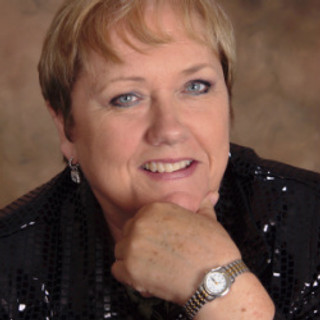
Interview Detective Ed Frushour
LYNN: Did you always want to be a cop?
ED: I ended up in law enforcement when life plans changed and my father had a heart attack. Instead of going to college, I stayed at home and went to Morgan County Community College. While there, I worked two jobs, one as a gas station attendant and then as a school bus driver. Both jobs put me in direct contact with local law enforcement officers. I also had joined the Colorado National Guard and was in the 221st Military Police Company.
I was in an EMT class when a Colorado State Patrol officer asked me if I ever wanted to join the patrol. At that time, I was too young, so I became a radio dispatcher instead. This meant I had to ride with troopers to areas we dispatched to. I got to know several areas in Colorado and finally applied to State Patrol, Denver PD, and Aurora PD. The Denver PD hired me in 1977.
LYNN: What’s the toughest lesson you learned working on a murder case?
ED: For most of my career, I worked as a Crime Scene Investigator with the Denver Police Crime Lab. We processed the scenes to find physical evidence, document everything with video and still photography, and then assist the assigned detective. When we completed our work, that was the end of our job. We had little or no investigative duties in the cases once we cleared the scene.
The toughest lesson I learned in working homicide cases, however, was to keep an open mind.
Just because you have been to a lot of classes, seen a lot of death, and processed a lot of crime scenes, every case is different. And you learn not to discount suggestions made by people who have less experience than you. Just because you can explain why a suggestion may be out of place, it doesn’t mean the suggestion isn’t worth considering. And just because you’re the ‘expert,’ it doesn’t mean you are always right.
LYNN: Without naming names, what’s the toughest case you were involved with and what made it so tough?
ED: As a crime scene investigator, you develop a brick wall to shield yourself from the horrors that people can do to each other. We stay professional and do the best we can to bring justice for the victim. However, things often chip away at that wall.
On a cold winter night before Christmas, a customer shot and killed a barber on E. Colfax Ave. because he didn’t like the haircut he got.
We responded to process the scene. As we were taking photographs and making a video, the phone in the barber shop began to ring, but of course, we couldn’t answer it. A short time later, we heard a loud scream and saw a woman standing in front of the shop holding a baby. She was wearing a nylon parka, and the baby was in a nylon winter bunting. As she stood there crying and shaking, the baby began to slip from her arms. I was able to get outside and grab the baby just before she dropped it. As it turned out, she was the daughter of the barber and had been the one calling. When she couldn’t get hold of him, she came down to see what was wrong.
It’s at times like that when the wall of protection you’ve built comes crashing down. You realize there is a family that just lost a loved one, and it brings all the humanity that you have chased away to do your job flooding back into your soul.
LYNN: Is there a difference between working on a murder case and any other type of criminal case? If so, what?
ED: All crime scenes are important and demand the same amount of concentration. However, the reality is that an auto theft or a burglary is routine compared to a murder. The rigor of the prosecution and defense of the crime is not tested in the same manner as crimes against people. In a large city, property crimes are too numerous. Many are not investigated at all. Reports are taken over the phone, and the cases get pushed through the system. If a suspect is identified or arrested, the likely outcome is a plea bargain. A crime scene investigation in this instance is more than likely some photos and maybe dusting for latent fingerprints. DNA swabs may be collected but seldom submitted for analysis unless you are looking for a suspect who is stealing so much that the dollar value is adding up.
Homicides, aggravated assaults, and sexual assaults are different stories. These are crimes where a life has been taken or a severe injury has occurred. There is a likelihood that the suspect may kill or injure again if he/she isn’t caught and convicted. In these cases, everything you have learned as a CSI is critical and must be collected, processed, and recorded in a manner which can withstand the test of a court case, from both the prosecution and the defense.
LYNN: Was working major crimes any different once you moved to the country?
ED: Moving to a rural environment was a challenge for me. Working within a large department, I had all the resources one could ask for. And much of the reporting in the large department was accomplished by the specialized detectives assigned by the Unit doing the investigation. In my rural Unit, I became THE Crime Scene guy for a consolidated investigative team called CIRT--the Combined Investigative Response Team. I was responsible for major crime scenes for a unit consisting of both a medium-sized and a small Police Department, as well as a County Sheriff’s Office. That’s because the county included a medium sized city of 55,000, a small town of 4,500, and many smaller unincorporated towns.
As the Crime Scene Investigator for my rural departments, I was responsible for everything, including doing crime scene sketches and writing the crime scene narratives. I had never had to do those before. Fortunately, I knew how to do those things by having taken a multitude of crime scene classes.
LYNN: What’s the number one thing an investigator needs to remember when coming upon a crime scene?
ED: Have a plan. Having a plan is key to a successful crime scene investigation. However, the plan is subject to revision depending on what you encounter. You begin by observing the scene and the lay of the land. Then, you talk to the first officer or investigator onsite and discuss the theory of what happened. It’s important not to get locked into one theory, discounting alternative theories. You must always approach the scene with an open and objective mind. You do a walk through to see what physical evidence is present, and then decide what is the best way to record, collect, and preserve the evidence.
You also can’t be afraid to ask for assistance from the people around you or from other agencies who might have more resources. You also try not to set speed records because things get overlooked or missed that way. Always retrace your steps and collect your trash and waste before you leave. Ask the lead investigator if there is anything else he might need or want recorded, because you might not get a second chance. Be careful not to overreach your training and abilities. First and foremost, do not do anything that you cannot explain in court.
LYNN: You said you specialized in crime scene investigations, forensic firearms, and tool mark examination. Can you explain more about those?
ED: Crime scene investigation involves having a general knowledge of most of the specific branches of forensic science. This includes best practices for documenting the crime scene with photographs and video photography. Finding and collecting latent fingerprints. Locating, recording, and collecting blood stains and other DNA related evidence. Collecting and preserving impression evidence such as tool marks and shoe impressions. Recording, collecting, preserving, inventorying, and transporting physical evidence to the evidence depository.
Firearm and toolmark examinations are conducted by a specialized branch within the forensic sciences. In addition to doing many of the things a crime scene investigator does, the firearms and toolmark examiners examine firearms used in crimes or that have been collected by their departments to see if the firearm is a working firearm or a non-firing replica of an actual firearm.
Firearms examiners test weapons recovered by the departments either from crimes or suicides. We microscopically examine cartridge cases to see if they identify with each other or if there was more than one firearm involved. We microscopically examine recovered bullets to determine their class characteristics, which will give us the possible type of firearm used in a crime. If a firearm is recovered from the crime scene or by the follow up investigation, we will compare the test-fired bullets and cartridge cases to the recovered bullets and cartridge cases from the crime scene to see if they were fired from the recovered firearm.
We perform chemical tests on clothing articles to determine if there is gun powder residue deposited on the fabric. We conduct tests on fabric at different distances that will give us a probable range. Each firearm will produce patterns at different distances before losing the consistency of being a pattern. We also perform serial number restoration on firearms using methods involving chemical, electricity, and polishing techniques.
Toolmark examination is a process of identifying a tool used in a crime after the tool left impression marks. We recover the marks in several different ways. If possible, we will collect the piece of substrate the impression is on. We can photograph the impression or use evidentiary putty to collect the impression. If a suspected tool is found, the examiner can collect test cut marks and compare them to impressions from the crime scene.
______________________________________________
"I don't trust people; they tend to lie. Evidence never lies."
--Gil Grissom, CSI TV show
______________________________________________
LYNN: How much of your job did you take home with you, and how did it affect your personal life?
ED: My home life was my sanctuary. I shared little with my family. My wife did not want to know, and the kids were too small at the time. However, there were interruptions. The late-night callouts were a pain. Overtime from late calls could cause problems. And the continuous court appearances would interfere with family time.
The one thing that would drive my wife crazy would be when driving around Denver, I would point out places where homicides, suicides, and police shootings had occurred. My youngest son was able to join me at work once on 'take your child to work day.’ The Columbine shooting had happened that day, and most of the Lab personnel were dispatched to help Jefferson County at the school or at the various morgues where they were performing autopsies. My fellow firearms examiners told me to bring my son to the firearms lab instead, while they went to the morgues. Good idea.
LYNN: If you read murder mysteries, what’s the most common mistake authors make?
ED: This is a hard question to answer. Authors have the magic of poetic license. It would be hard to have your main or supporting characters have to follow the rules that modern forensic scientists are bound to follow, either from the professional organizations or legal restraints placed on them by courts or legislative bodies. The quick turnaround identifications, either through fingerprints or DNA, are misleading because examination results can take days to weeks to get back. Large departments have a better chance of getting their answers fast. Rural departments must wait in line while state or federal labs take the requests in the order received or the case is elevated by public concern. The State and consolidated laboratories must prioritize their case load based on their budget, manpower, or the amount of public concern in a specific case.
LYNN: If you had one piece of advice for a mystery author, what would it be?
ED: Mr. Holmes led us down the path of scientific investigations. His logic and power of deductive reasoning, coupled with the growing acceptance of science in the late 19th and early 20th century, opened a treasure trove of possibilities for the crime writer. However, defense attorneys and the courts are whittling down what used to be accepted as scientific fact.
Examples include… how can we say that every fingerprint is different, since every fingerprint has not been examined and compared? The same argument can be made with firearm evidence. Questions now arise about what the error rate is in the examinations. And how did the examiner do his examination? Did he examine the evidence subjectively or objectively? Did the examiners make their decision based on latent or preexisting biases?
Forensic scientists are asked now to show that their conclusions have probability numbers that are similar to DNA. That means being able to state that the bullet we examined was fired from a particular barrel with only a 1 in 13 trillion chance of being fired from another firearm. We’re not able to make those statements. Where we used to be able to go to court and say a bullet was fired from this firearm to the exclusion of all other firearms, we can now only state that in our opinion we believe this firearm fired that bullet. This leaves evidence that used to be accepted as fact in criminal trials open to doubt. It only takes one juror to have doubt to let a guilty criminal go free.
I guess this leaves the pages blank for the crime writer to forge new stories for the 21st century. What new advances in science and technology will be discovered to solidify the conclusions made by forensic science which will stand up to the scrutiny of defense lawyers and the court? Will AI be the new investigator leading the gumshoe detective to make the arrests? Your imagination is the flood gate to a new world of police work.

LYNN: Wow! Thanks so very much, Ed. I've learned a lot, and hopefully my readers have, too.


Comments