


INTERVIEW WITH JAMIE GAUNT: Conference on Crimes Against Women

BIO
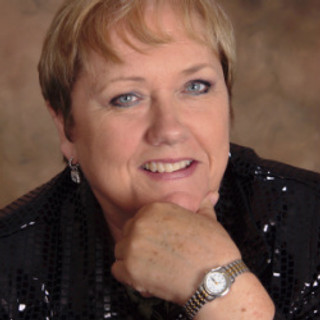
Jamie was born and raised in Dallas, Texas and attended the University of Southern California, where she earned her Bachelor of Science degree in Gerontology. She received her Masters in Business Administration from the University of Texas at Austin. Jamie is married with two girls. She is passionate about animals, ending domestic violence, and bringing joy to other people’s lives. She has worked for CCAW for four years.
INTERVIEW
LYNN: Tell us how the Conference on Crimes Against Women came about.
JAMIE: Back in 2005, Genesis Women’s Shelter & Support and the Dallas Police Department came together with a shared goal—to create a space where professionals could receive high-quality, multidisciplinary training focused specifically on crimes against women.
At the time, there really wasn’t a single forum that addressed these issues in a comprehensive way. Different professions were often working in silos, even though they were responding to the same cases. The idea behind the conference was to break down those silos and bring everyone to the same table—law enforcement, prosecutors, advocates, and others—so they could learn from each other and improve how they respond collectively.
What started as a collaborative effort in Dallas has grown into an internationally recognized conference that draws professionals from across the country and beyond. But at its core, the mission has stayed the same: to provide the training, tools, and connections needed to better address and ultimately reduce crimes against women.
LYNN: How has it changed/grown since its inception?
JAMIE: The backbone is the conference in Dallas. CCAW convenes leading experts to train thousands of first responders and community stakeholders on best practices in identifying, investigating, and prosecuting crimes against women. Over 250 workshops, case studies, and computer labs are offered for an interactive learning experience.
In 2018, CCAW created the Institute for Coordinated Community Response (ICCR) to better reach under-resourced practitioners from rural communities. ICCR’s mission is to work alongside rural communities to improve their collaborative, systemic responses to domestic violence.
More recently, CCAW launched CCAW Summit: Beyond the Bounds, tailored to address crimes occurring in rural and resort communities. These areas are often overlooked in traditional training, and yet, these communities face distinct challenges, such as limited resources and transient populations, which can complicate investigations and victim support. As a smaller, more intimate conference, 300 attendees receive key training to help them with unique challenges.
The Podcast on Crimes Against Women (PCAW), currently in its seventh season, works to raise public awareness of the prevalence and gravity of violence against women.
Then, in 2023, CCAW launched the National Training Center on Crimes Against Women (NTCCAW). This facility, located on our Dallas campus, provides a venue for all disciplines to convene year-round and delve deeper into much-needed topics.
LYNN: What do conference attendees hope to achieve?
JAMIE: The conference really brings together a wide range of professionals who all intersect with crimes against women in different ways. That includes law enforcement, prosecutors, advocates, first responders, forensic nurses, medical examiners, and even policymakers. What’s unique is that it’s truly multidisciplinary—you’re not just in a room with people who do exactly what you do, you’re learning alongside people who touch the same cases from completely different angles.
What they’re typically hoping to gain is very practical. They want the most up-to-date tools, strategies, and technology to do their jobs better—whether that’s improving investigations, building stronger cases, or providing more effective, trauma-informed support to survivors.
They’re also looking for connection. This work can be really difficult and, at times, isolating, so being able to collaborate, share ideas, and learn from others across the country, even internationally, is incredibly valuable.
Most attendees come in wanting to get better at what they do—and they leave with both the knowledge and the network to make that happen.
LYNN: How is the Beyond the Bounds Summit different from the conference?
JAMIE: CCAW Summit: Beyond the Bounds was launched in 2024 in South Padre Island, Texas. Held in September, the summit serves as an extension of the larger conference to highlight the specific gender-based challenges unique to coastal cities, rural towns, and resort communities, including geographic isolation and transportation issues. Lack of anonymity and limited access to resources and services also create significant challenges.
The CCAW Summit provides education, training, and best-practice strategies to address problems such as: Aquatic Homicide, Human Trafficking, Immigration and Border Issues, Sexual Abuse, CPS Involvement, 9-1-1 Reporting, Domestic Violence, Law Enforcement Report Writing, Forensic Nursing, Prosecutorial Perspectives.
LYNN: You have a very active podcast. Tell us about the types of guests you have and what your goals are with the podcast.
JAMIE: The Podcast on Crimes Against Women really serves as an extension of the conference, taking the same topics and diving deeper through conversations with experts and those directly impacted. We feature a wide range of guests that include law enforcement, prosecutors, advocates, researchers, and survivors. Listeners get a well-rounded, multidisciplinary perspective.
What makes it different is that it’s trauma-informed and grounded in decades of learning from both survivors and experts. It’s not about sensationalizing stories, even when discussing true crime. It’s about understanding what happened, what can be learned, and how it can inform better responses moving forward.
LYNN: In your opinion, what is the overall significance of the Conference on Crimes Against Women?
JAMIE: It really comes down to impact. The conference brings together people who are all working on different parts of the same problem, and it creates a space where they can actually learn from each other and work more effectively together.
What’s powerful is that it’s not just about talking about these issues. It’s about giving people real tools and strategies they can take back and use immediately. The hands-on labs, the case studies, the access to national experts translates into better investigations, stronger cases, and more support for survivors.
It also has a ripple effect. When you’re training thousands of professionals every year, that knowledge goes back into communities across the country. That means better responses, more collaboration, and ultimately safer outcomes for women. The conference is significant because it doesn’t just raise awareness. It actually helps move the work forward in a very real, practical way.
LYNN: What changes do you see in its future and its ability to make a difference?
JAMIE: Looking ahead, the future of the conference is really centered on deeper collaboration and broader impact. As these crimes continue to evolve, the need for professionals to work more seamlessly across disciplines will only grow. The conference will continue to strengthen those connections and truly align approaches.
There’s also a clear opportunity to drive even greater systemic change. By expanding training opportunities beyond the annual conference, through year-round programming, the National Training Center, and targeted initiatives in underserved communities, the reach and impact can continue to grow. That means influencing not just individual cases, but policies, practices, and coordinated community responses at a larger scale.
Ultimately, the conference is uniquely positioned to keep shaping how this work is done, helping move the field forward, improving outcomes for survivors, and creating more consistent, effective responses across the country.
LYNN: Have you had a moment when you learned something new or perhaps saw something so much clearer than before that it made an impact on you?
JAMIE: I think my biggest “aha” moment wasn’t just one single instance, but something that became clear over time. Year after year, hearing survivor stories alongside the professionals that work these cases, it really clicked for me how critical a coordinated response is.
You start to see that it’s not just about one good investigator or one strong advocate. It’s
about how every piece of the system works together. When that coordination is there, the outcomes are dramatically different. Cases move forward more effectively, survivors are better supported, and there’s a level of accountability that might not otherwise happen.
That realization made the mission feel even more urgent and clear. It reinforced that what we’re doing isn’t just training individuals, but also, it’s helping strengthen entire systems. And when those systems improve, the ripple effect for survivors and communities is incredibly powerful.
LYNN: Have you ever been brought to tears because of the conference and what you’ve learned?
JAMIE: Yes—there have definitely been moments over the years that have been incredibly moving. Hearing survivor stories and the realities behind the work can be powerful in a way that stays with you. Those moments are a reminder of why this work matters so much.
At the same time, what stands out is not just the trauma, but the strength and resilience of survivors, and the dedication of the professionals working to support them. It’s that combination of hard truths alongside real impact that can be emotional.
Those experiences don’t just stay in the moment; they deepen the commitment to the work. They reinforce the importance of continuing to learn, improve, and collaborate so that responses are stronger and outcomes are better for those who need it most.
LYNN: What message would you like to leave my readers?
JAMIE: The message to readers is that this work truly matters. It requires a collective effort. Crimes against women are complex and interconnected, and no single discipline can address them alone. Meaningful progress depends on collaboration, ongoing education, and a shared commitment to improving responses across systems.
It’s also important to recognize that this field is constantly evolving. Offender tactics change, technology advances, and the needs of survivors continue to grow. Investing in training and staying informed is essential to ensure professionals are equipped to respond effectively and compassionately.
Ultimately, every role in this work has impact. Whether on the front lines or supporting from behind the scenes, each contribution helps strengthen responses, improve outcomes, and create safer communities for women.
LYNN: How can people help?
JAMIE: There are several meaningful ways people can support this work. For those in the corporate sector, we need financial support. Whether through event sponsorship or investing in the organization overall, fundraising plays a critical role in helping us continue to provide high-quality training as a nonprofit.
We also welcome volunteers, especially at our annual conference. More information on how to get involved is available on our website.
And just as importantly, helping us spread the word makes a real difference. Encouraging professionals in this field to attend our conferences, participate in training, or engage with our podcast expands the reach of this work. Because ultimately, knowledge is power, and when one person is better equipped, that impact extends into entire communities.
LYNN: Thanks so much, Jamie. I think what you all do is amazing. For those of you who might be interested, here is the link to the conference website:


Comments